Fibermaxxing: what to keep from the trend, and what to skip.
The online push for more fiber has a useful starting point. A balanced, gradual approach matters more than chasing the biggest number.
 AI-generated illustration
What is fibermaxxing?
Fibermaxxing is an online label for deliberately increasing dietary fiber, often by building meals around foods such as oats, beans, seeds, and fruit. Cleveland Clinic has addressed the trend in a discussion with a registered dietitian about digestive health and the gut microbiome. The catchy name is not a medical recommendation or a new nutrient requirement. Treat it as a reason to look at your usual meals, rather than a challenge to eat the largest possible amount.
Start with a balanced food pattern
WHO recommends getting carbohydrates primarily from whole grains, vegetables, fruit, and pulses. Its guidance for people older than 10 includes at least 25 grams of naturally occurring dietary fiber daily. That is general public health guidance, not a personalized target for every digestive condition. Food variety remains important: adding fiber does not make the rest of your diet irrelevant. A product can advertise a large fiber number while still being a poor fit for your needs, budget, or preferences.
Look for familiar foods first
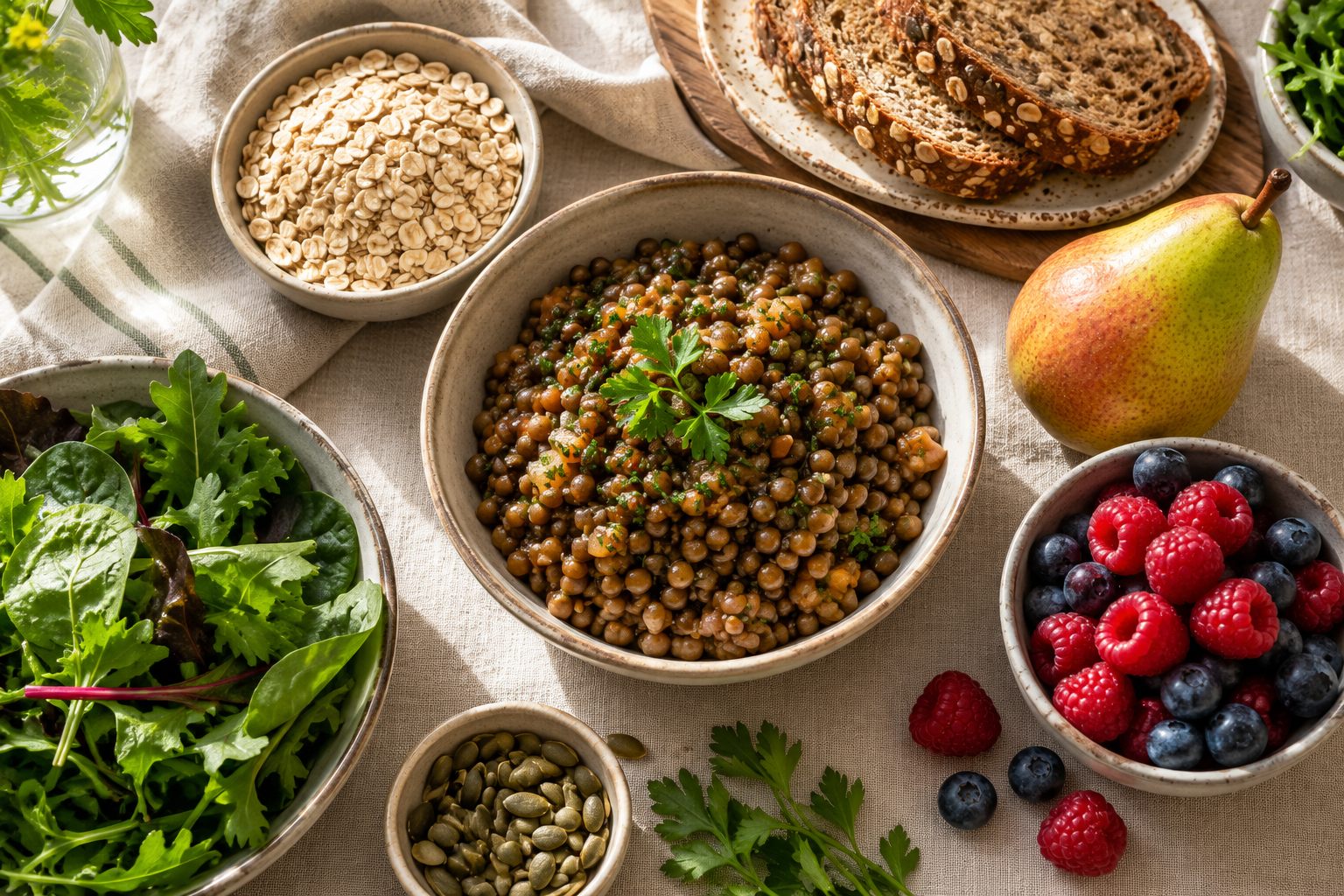
NIDDK lists whole grains, legumes, fruit, vegetables, and nuts as fiber sources. You do not need a special powder to start noticing where those foods fit. Consider the meals you already enjoy: could oats work at breakfast, lentils in a soup, or beans in a familiar salad? These are meal-planning examples, not a prescribed menu. Keep allergies, food access, cultural preferences, and any dietary restrictions in view. An ordinary meal you can repeat is more practical than a complicated bowl made only for a photograph.
Why a sudden jump is not the goal
NIDDK advises adding fiber a little at a time so the body can adjust, and drinking appropriate fluids to help it work. Cleveland Clinic also discusses bloating and the differences between food sources and supplements. Do not interpret a social media challenge as a reason to ignore discomfort. If you have a condition that affects what you can eat, ask a qualified clinician or dietitian how general guidance applies to you. There is no universal amount of water or fiber that this article can safely prescribe for everyone.
Read the label in the context of a meal
When considering a packaged product, look at the serving size before comparing its fiber number with another food. Then consider what the product is replacing and whether you actually enjoy it. Keep a distinction between a claim on the package and a claim about your own health. A high-fiber label does not establish that a product treats a digestive disorder, creates a particular microbiome, or guarantees weight loss. Ask for the evidence behind an additional claim rather than assuming the fiber number proves it.
Try a small meal-planning exercise
Write down one typical day of eating without trying to make it look better. Circle the meals that already contain whole grains, pulses, fruit, or vegetables. Choose one realistic change to discuss or try within your dietary needs, and add the ingredients to a normal shopping list. Record whether the change was convenient and enjoyable. If it turns an easy meal into an expensive project, simplify it. This exercise is about understanding your routine, not grading your food choices or setting a competitive intake target.
When to seek individual guidance
Persistent digestive symptoms need an appropriate assessment rather than an endless series of online diet experiments. NIDDK recommends working with a healthcare professional to plan the right amount of fiber. Bring a description of your usual foods, symptoms, and any supplements you use. The useful part of fibermaxxing is the attention it brings to everyday food choices. Keep that curiosity, but let evidence and personal circumstances guide the amount and pace of change.
 AI-generated illustration
 AI-generated illustration